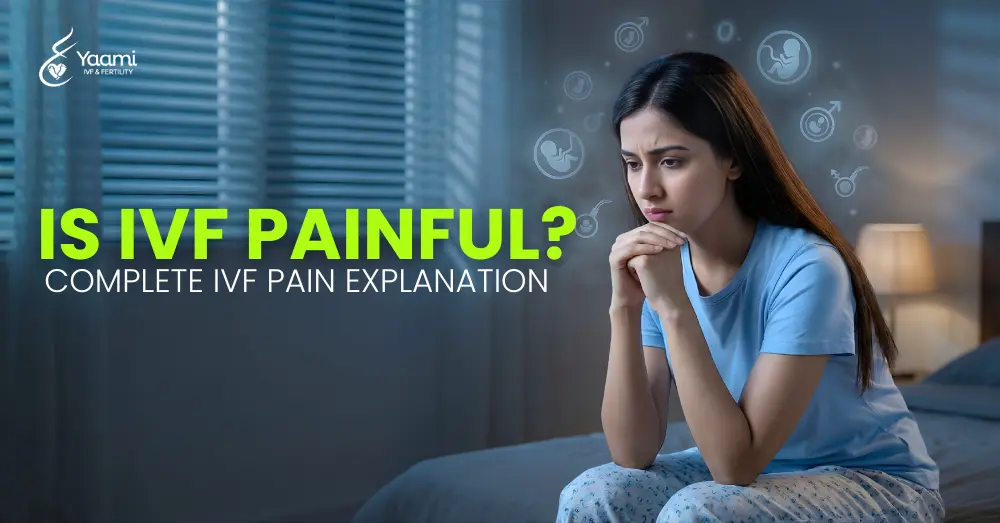
Many people wonder; is IVF painful? But in reality, most stages involve only mild discomfort rather than severe pain. The process includes hormonal injections, ovarian stimulation, egg retrieval under anaesthesia, and embryo transfer, where women may experience temporary sensations like mild pricking, abdominal bloating, cramps, or pelvic heaviness. While the physical discomfort is usually manageable and short-term, the emotional aspect, such as anxiety, hormonal mood changes, and the stress of waiting for results, can be challenging for some couples. With proper medical guidance, hydration, gentle activity, and clear communication with fertility specialists, the IVF journey can be made more comfortable and manageable.
Whenever couples are advised for IVF by the experts, firstly, they talk to those who have experienced successful IVF. You might be one of them and must have heard mixed opinions about IVF. Some people said it was tougher than they expected. Others said it was easy going, and somewhere in the middle of those stories, one question keeps you up for the whole night, and that is, Is IVF painful?
Of course, it’s a valid question because choosing IVF is itself a big decision in your life, and you need clear, honest feedback.
According to the IVF specialist Dr. Sankalp Singh (Reproductive Medicine), MBBS, MS, MRCOG (London), FRM, DRM (Germany) at Yaami IVF and Fertility Centre, Indore, the fear of pain is one of the biggest reasons couples delay starting IVF even when it could help them, but when they understand what each step involves, the fear reduces gradually.
So, if you want to know the reality of the IVF procedure, before & after experience, then read this blog till the end.
What is IVF & Is IVF Painful?
IVF, In Vitro Fertilization, is a fertility treatment where doctors collect eggs from your ovaries, fertilize them with your partner’s sperm in a laboratory. Once it becomes an embryo, the doctors place it back into your uterus. This whole process takes about two to three weeks.
Now, the question arises: Is IVF painful?
To be very honest, it depends on the stage of treatment and on your body’s individual response. Some stages involve injections, internal ultrasounds, egg retrieval, and embryo transfer. So, in these stages, a woman has to go through a quick string of routine blood tests, daily hormone injections, bloating, and mild cramping. Hence, we can describe this process as uncomfortable rather than painful.

Is IVF Painful Process? (Step-by-Step)
Let’s walk you through each stage of IVF and understand exactly what level of discomfort is involved:
- IVF Injection: Are They Painful?
This is usually the first step of your IVF. In this, you will have to take hormonal injections for about 8 to 12 days to stimulate your ovaries. These injections are very thin needles; you will only feel a tiny pricking or mild sensation that lasts only for seconds.
- Ovarian Stimulation: Is it Painful?
Once the injections begin, your ovaries start producing more follicles than they would in a natural cycle. In this phase, you will feel noticeable fullness or heaviness in the lower abdomen, a similar feeling right before your period.
- Egg Retrieval Procedure: Is it Painful?
In this phase, you will be given anaesthesia, and your fertility expert will insert a needle through the vaginal wall under ultrasound guidance to collect the eggs from your follicles. This process takes around 15 to 20 minutes; you will not feel any severe pain.
- Embryo Transfer – Is it Painful?
This is the final procedure of IVF, where a soft catheter is passed through your cervix into your uterus to place the embryo. No needles, no cuts, and no anesthesia are required in most cases. After the transfer, you might notice mild cramping or pelvic heaviness for 2 -3 days, and you don’t have to worry; this is completely normal.
Note: After the completion of your IVF procedure, your fertility specialist will give you clear instructions on rest and what to avoid in the days that follow.
Where Does IVF Pain Usually Happen?
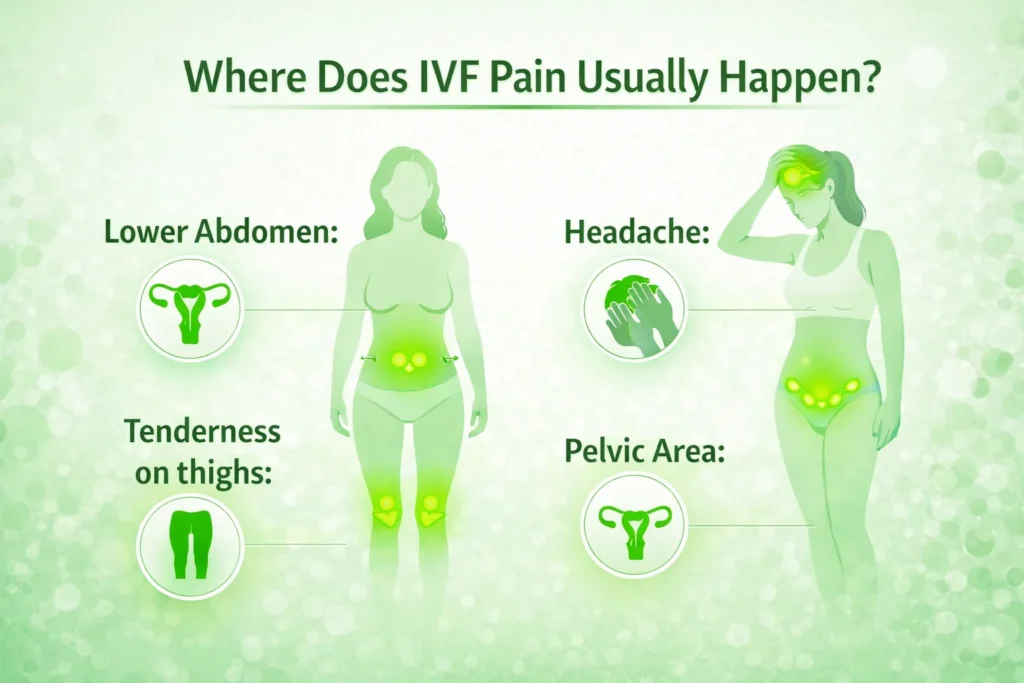
If you experience discomfort during your IVF process, it is most commonly felt in areas such as:
- Lower Abdomen: You might feel pain in the lower abdomen due to ovarian stimulation and bloating.
- Headache: Due to IVF injections, your hormones fluctuate, so you might feel a headache.
- Tenderness on thighs: You might feel tenderness around the stomach or thighs, where mild bruising or redness can occur.
- Pelvic Area: You can experience mild cramping due to egg retrieval.
Emotional Challenges During IVF
You often discuss the physical pain during IVF, but ignore the mental & emotional battle. In the procedure, you have to take daily injections, come to the hospital for repeated scans, wait to hear how many eggs were collected, and hope the fertilization goes well.
And in this process, you may face many emotional challenges, such as:
- Anxiety before the blood scan.
- Mood swings from the fertility hormones.
- A sense of loneliness, even when your partner is with you.
- A fear of another IVF failure, especially after a previous unsuccessful cycle.
How to Reduce Pain and Discomfort During IVF
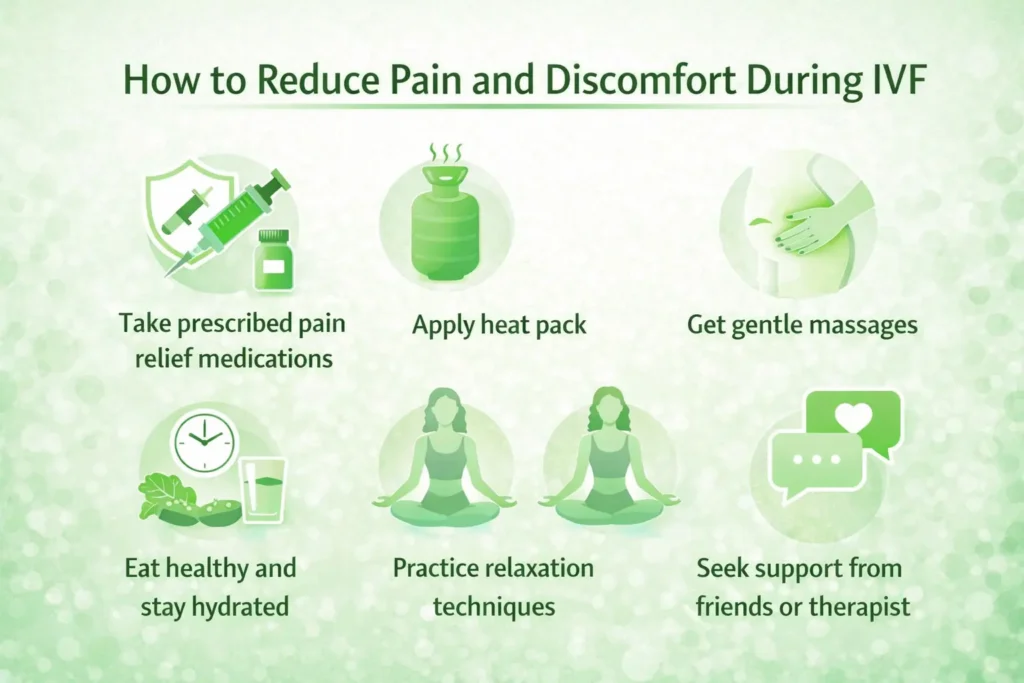
To make your IVF journey smoother, you can take some small steps, like:
- Heat Therapy: You can use a warm heating pad that can help with injection site soreness or bloating.
- Stay Hydrated: Drink plenty of water to help reduce bloating and support your body’s recovery.
- Gentle Movement: You can do gentle walking that will help you with better circulation and ease pelvic heaviness.
- Communication: Always share everything with your specialist, never hesitate if you feel something is off.
When to Contact Your Doctor During IVF
Most of the discomfort during IVF is normal and manageable, but there are certain signs that you should not ignore and immediately consult with your IVF specialist if you feel:
- Severe abdominal pain that does not ease with rest.
- Abdominal swelling, particularly after egg retrieval.
- High fever above 100°C at any point in your cycle.
- Heavy vaginal bleeding beyond light spotting.
- Difficulty breathing or sudden shortness of breath.
- Persistent nausea and vomiting that is not settling.
Conclusion
So if you ask: is IVF painful? Physically, it is a journey of small pinches and mild cramps and emotionally, it’s an intense rollercoaster often blending hope and excitement with anxiety, that will eventually lead towards a successful parenthood journey.
At Yaami IVF & Fertility Centre, Indore, we are always there to support you in this journey. At any stage of your pregnancy journey, you are not alone; our fertility specialists are always with you to provide the right direction and care.
If you or someone you know is planning to get IVF done, or simply wants to understand what their IVF journey might look like, then we are here to help.
You can reach us at 78800 07281 and book a free consultation with our experts.
FAQs
Is IVF More Painful Than Period Pain?
For most, the discomfort is very similar to period cramps. The egg retrieval is done under anaesthesia, so that specific part is actually less painful than periods.
Are IVF injections very painful?
No. The injection needles are very fine, and it might be scary for you to know that you will be self-injecting them. But you don’t need to worry, because you will just feel the mild sting or pinch of the injection, and this physical sensation is a minor, temporary one.
How Long Does IVF Pain Last?
Any bloating or cramping usually subsides within a few days after egg retrieval. By the time of the embryo transfer, most women feel physically back to normal.
Is IVF painful for women?
IVF is generally not considered severely painful, but a process involving mild to moderate discomfort.

Dr. Sankalp Singh (MBBS, MS – Obstetrics & Gynecology, FIRM, FRM – Germany) is a highly respected Reproductive Medicine and IVF specialist with over 20 years of clinical experience. He is the founder and chief consultant at Yaami Fertility & IVF Center, Indore, where he provides advanced fertility solutions including IUI, IVF, ICSI, and fertility preservation. Trained internationally, Dr. Singh combines global expertise with a compassionate approach to guide couples on their journey to parenthood. He is also deeply committed to academic teaching, clinical research, and spreading awareness about reproductive health and fertility treatments.