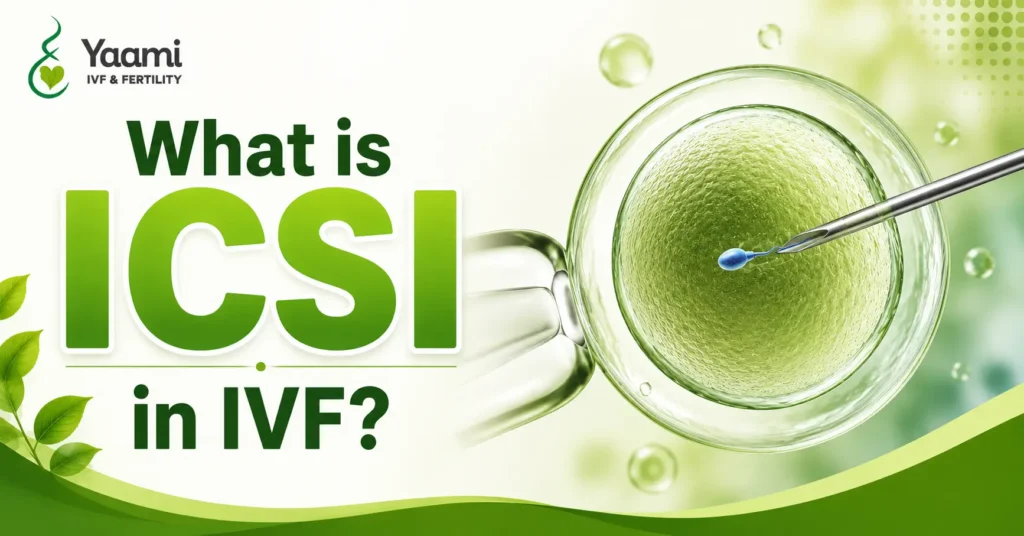
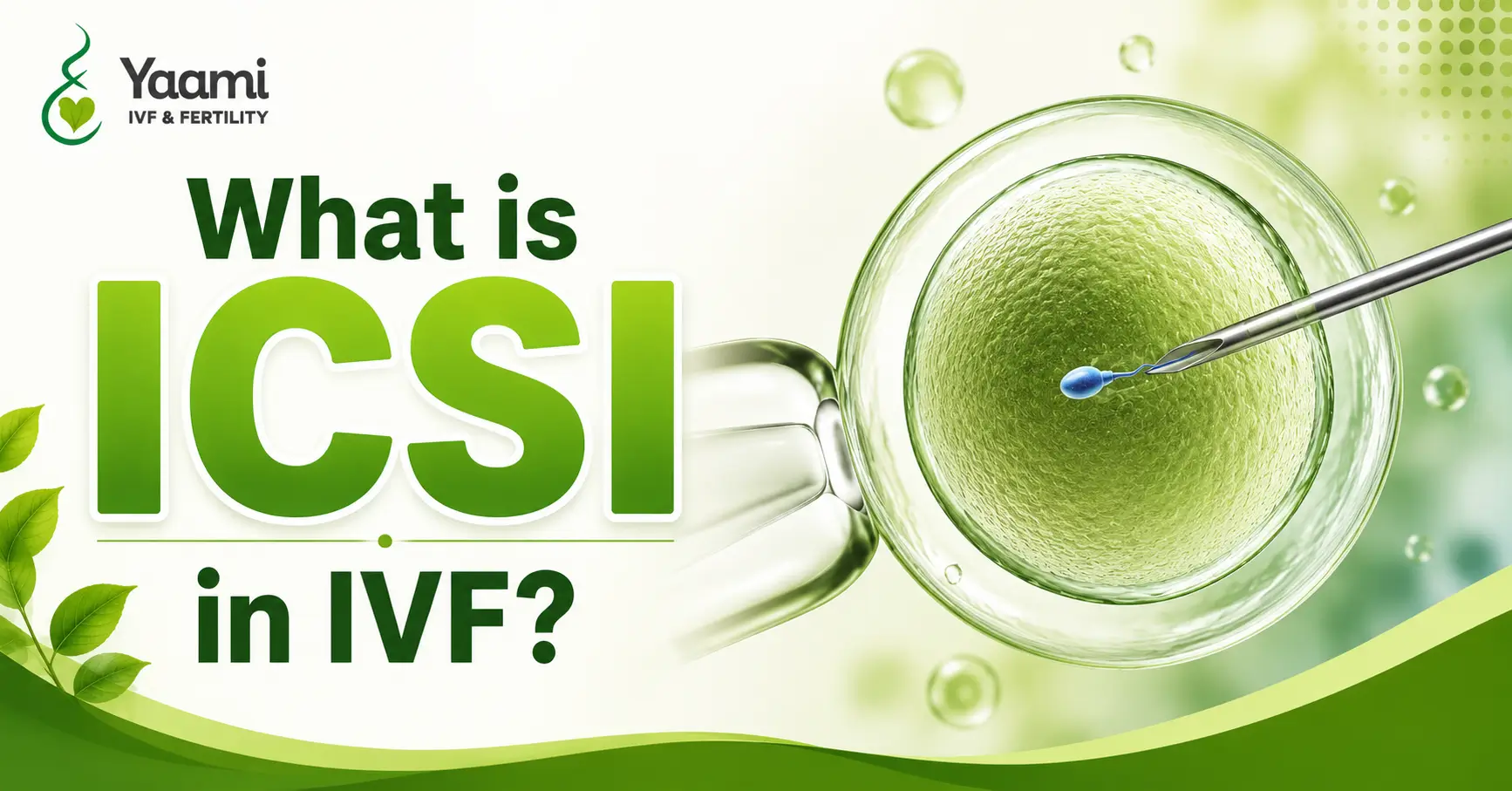
What is ICSI in IVF? – ICSI (Intracytoplasmic Sperm Injection) is a specialized form of IVF where a single healthy sperm is injected directly into an egg to help with fertilization. It is often recommended for couples with male infertility, poor sperm quality or previous IVF fertilization failures. ICSI has removed some of the barriers to fertilization and increased the chances of embryo development and pregnancy. It is one of the most important advances in modern fertility treatment.
What if eggs and sperm are brought together during IVF, but fertilization still doesn’t occur? If you’re a couple planning to go for an IVF or undergoing an IVF cycle, you might have also come across this kind of question.
For many couples, this can be one of the most disappointing moments of the fertility journey. After months or even years of trying to conceive, after ovarian stimulation and egg retrieval, the hope is to have healthy embryos form. But sometimes fertilization may not occur as anticipated.
This is where advanced embryology techniques like ICSI can make a significant difference.
“ICSI has been a saviour for many couples who were previously left with very few options for treatment,” says Dr. Swati Singh (Reproductive Medicine Specialist, MBBS, MD, DNB, FRM, DRM) of Yaami IVF & Fertility Centre, Indore. ICSI can help the fertilisation process in the laboratory and improve the chances of creating healthy embryos in carefully selected cases.
If you have been wondering what is ICSI in IVF, how it is different from normal IVF and if it may be suitable for your fertility journey, then this blog will help you understand everything in simple language.
Standard IVF vs. ICSI: The Key Difference in the Lab
To understand ICSI, you need to first understand how standard IVF works.
In conventional IVF:

- Eggs are collected from the ovaries.
- A prepared sperm sample is added to the eggs.
- Fertilization happens naturally inside the laboratory dish.
- The sperm must independently enter in the egg.
In many couples, this process works successfully.
However, some situations make this fertilization difficult.
This is where ICSI steps in.
ICSI stands for Intracytoplasmic Sperm Injection.
So instead of letting the sperm fertilise the egg on its own , an embryologist picks out a single healthy sperm and injects it into the egg using special microscopic equipment .
This single step creates the main ICSI vs IVF difference.
| Standard IVF | ICSI |
| The sperm fertilises the egg naturally | Embryologist injecting sperm into egg |
| Multiple sperm placed around egg | One selected sperm used |
| Depends on sperm getting into egg. | Bypasses many sperm-associated barriers |
| Good for many fertility uses | Often used for male factor infertility |
Both procedures are used to obtain fertilisation, but ICSI is used when natural fertilisation is less likely to occur, especially in the cases of male infertility.
Now let’s look at how the procedure is actually performed in the embryology laboratory.
The Step-by-Step Medical Process of ICSI
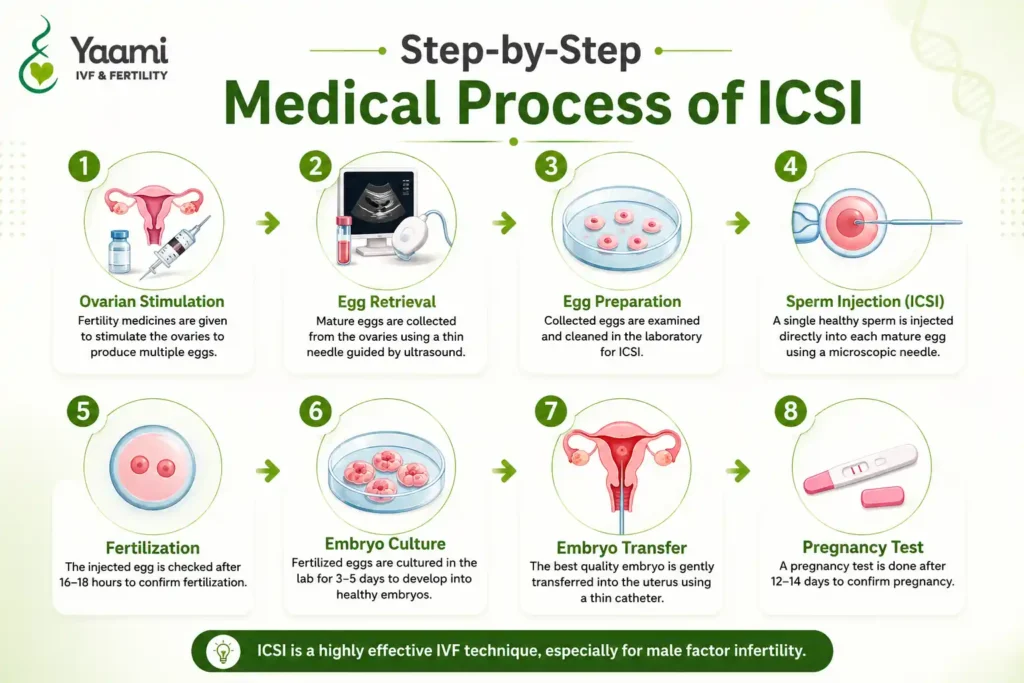
Although ICSI involves highly advanced technology, the process can be understood in a few simple steps.
Step 1: Ovarian Stimulation
The female partner receives fertility medications to help multiple eggs mature.
These eggs are monitored through ultrasounds and blood tests.
Step 2: Egg Retrieval
Once the eggs are ready, they are collected through a minor procedure called egg retrieval.
The collected eggs are immediately transferred to the embryology laboratory.
Step 3: Sperm Collection and Preparation
A semen sample is collected and carefully processed.
Embryologists identify the healthiest and most active sperm cells for use during ICSI.
Step 4: Sperm Selection
Using high-powered microscopes, the embryologist selects a single sperm that appears healthy and structurally normal.
Step 5: Sperm Injection
The selected sperm is injected directly into the mature egg using a specialized microscopic needle.
This is the most important step of the ICSI procedure.
Step 6: Fertilization Assessment
The following day, embryologists examine the eggs to determine whether fertilization has occurred.
Step 7: Embryo Culture
Successfully fertilized eggs continue developing into embryos.
These embryos are monitored carefully before embryo transfer or freezing.
Although the process sounds highly technical, it is performed routinely in advanced IVF laboratories worldwide.
Who is the Ideal Candidate for an ICSI Treatment Cycle?
ICSI is not automatically required in every IVF cycle. Instead, fertility specialists recommend it when there are specific concerns about fertilization.
Let’s look at the situations where ICSI can be especially helpful.
1. Severe Male Factor Infertility (Low Count/Motility)
Male factor infertility is one of the most common reasons for recommending ICSI.
In some men:
- Sperm count may be very low.
- Sperm movement (motility) may be poor.
- Sperm shape may be abnormal.
In these situations, sperm may struggle to reach or penetrate the egg naturally.
Because ICSI directly places a selected sperm inside the egg, many of these barriers can be overcome.
This has made ICSI one of the most effective treatment options for severe male infertility.
However, sperm quality is not the only reason doctors may consider ICSI.
2. Previous Unexplained Fertilization Failure in Standard IVF
Sometimes everything appears normal.
The eggs look healthy.
The sperm analysis seems acceptable.
Yet fertilization does not occur.
This situation can be emotionally difficult for couples because there is often no obvious explanation.
One of the most important fertilization failure solutions in such cases is ICSI.
By directly injecting the sperm into the egg, embryologists can bypass several steps that may have contributed to fertilization failure during a previous IVF cycle.
For couples who have experienced failed fertilization before, ICSI often provides an additional layer of support.
But there is another situation where ICSI may also be beneficial.
3. Using Thawed/Frozen Oocytes
Egg freezing has become increasingly common for fertility preservation.
When frozen eggs are thawed later for IVF treatment, their outer shell may become slightly harder.
This can sometimes make natural fertilization more challenging.
For this reason, many IVF centers routinely perform ICSI when using frozen-thawed eggs.
The procedure helps improve fertilization efficiency and maximizes the chances of embryo development.
Does ICSI Increase the Risk of Abnormalities? A Clinical Reality Check
One of the most common questions couples ask is whether directly injecting sperm into an egg increases the risk of birth defects or abnormalities.
This concern is understandable.
After all, ICSI is a highly specialised laboratory procedure. Fortunately, decades of research have yielded useful information.
The majority of ICSI children are healthy and develop normally. It is important to realise.
However, some risks may be associated with the underlying infertility rather than the ICSI procedure.
What Patients Should Remember
| Myth | Reality |
| ICSI makes abnormal babies | Most babies born through ICSI are healthy |
| ICSI is risky for everyone | ICSI is considered safe when appropriately used |
| Every IVF patient needs ICSI | ICSI is recommended only in specific cases |
| ICSI Assures Pregnancy | It increases the chances of fertilisation but does not guarantee success |
The most important takeaway is that ICSI should be viewed as a valuable laboratory tool rather than a treatment that automatically increases risk.
When used for the right patients, it can significantly improve the chances of achieving fertilization and embryo development.
Conclusion
Understanding what is ICSI in IVF can help you feel more informed about one of the most advanced techniques used in modern fertility treatment. By directly injecting a single sperm into an egg, ICSI helps overcome several barriers that may prevent successful fertilization in conventional IVF.
For couples facing male factor infertility or searching for effective fertilization failure solutions, ICSI has opened new possibilities and helped millions of families worldwide achieve pregnancy.
At Yaami IVF & Fertility Centre, Indore, our experienced fertility specialists and advanced embryology laboratory work together to recommend the most appropriate treatment approach for your unique situation. Through personalized care, modern technology, and evidence-based fertility treatment, we are committed to helping you move closer to your dream of parenthood.

Dr. Swati Singh (MBBS, MD – Obstetrics & Gynecology, DNB, FRM, Diploma in Reproductive Medicine and Embryology – Germany) is a leading Infertility Specialist and Gynecologist with over 18 years of experience. As Co-Founder and Senior Consultant at Yaami Fertility & IVF Center, Indore, she offers advanced fertility care including IUI, IVF, ICSI, and management of female reproductive disorders. Known for her compassionate and patient-first approach, Dr. Swati combines global training with deep clinical expertise. She is also actively involved in women’s health advocacy, medical research, and promoting awareness about reproductive wellness and fertility treatments.